Understanding Palliative Care: A Compassionate Guide for Families
Palliative care is not just for end-of-life. It's about relief, dignity and family support at any stage of a serious illness — here's how it works.
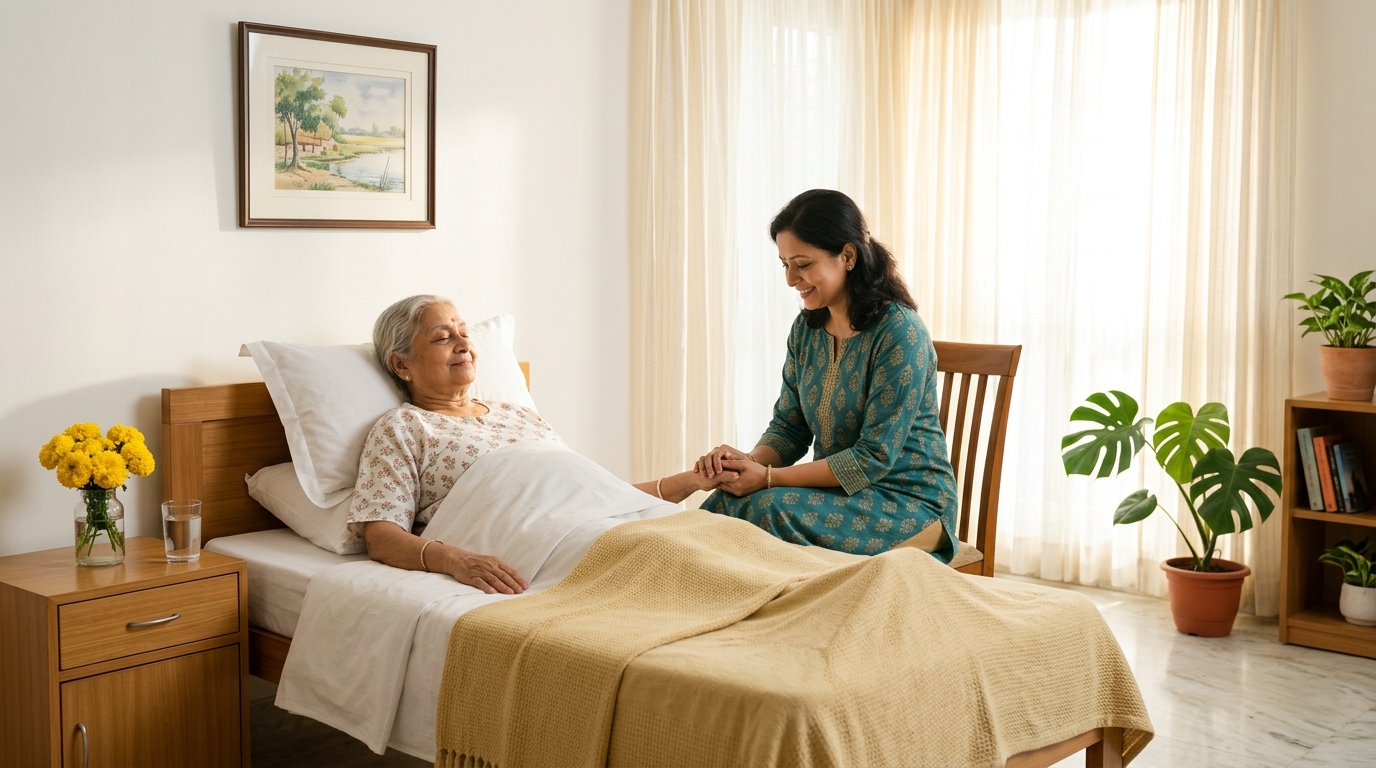
What palliative care actually is
Palliative care is one of the most misunderstood forms of medical care. Most Indian families first hear the term at a moment of crisis — usually when a treating doctor gently uses the phrase in the context of a serious illness — and immediately assume it means "end of life" or "we've given up".
This is not what palliative care is.
Palliative care is specialised medical care focused on providing relief from the symptoms and stress of a serious illness. Its goal is to improve quality of life for both the patient and the family. It can be provided at any stage of a serious illness, alongside curative treatment. It is not the same as hospice care (which is specifically for the final stage of life), though hospice is one form of palliative care.
The World Health Organization has for years recommended that palliative care begin early in the course of any life-limiting illness — not at the very end.
When palliative care is appropriate
Situations where palliative care meaningfully improves life:
- **Advanced cancer** — during and after chemotherapy, radiation, or surgery. Focused on pain, nausea, fatigue, emotional support.
- **Heart failure** — managing breathlessness, fluid overload, medication complexity, and the fatigue that accompanies late-stage disease.
- **COPD (chronic obstructive pulmonary disease)** — managing breathlessness, oxygen therapy at home, activity pacing, and infections.
- **Neurodegenerative diseases** — advanced Parkinson's, motor neuron disease, advanced dementia.
- **Advanced kidney or liver failure** — for patients not eligible for or not pursuing transplant.
- **End-of-life care** — when the goal shifts from cure to comfort, dignity and family support.
Importantly, palliative care can begin alongside curative treatment. A cancer patient can be receiving chemotherapy and palliative care simultaneously. In fact, evidence shows that patients who receive early palliative care alongside their curative treatment often live longer and with better quality of life than those who don't.
What palliative care at home looks like
For most Kolkata families, home-based palliative care combines several elements:
Medical care
- **Pain management** — this is often the most immediate concern. Modern palliative care uses a stepped approach: paracetamol, then mild opioids (tramadol, codeine), then strong opioids (morphine) when needed. All are safe when properly prescribed and monitored.
- **Symptom control** — nausea, breathlessness, constipation (a major issue with opioid pain relief), anxiety, insomnia.
- **Wound and skin care** — pressure sore prevention, dressing of any wounds.
- **Feeding and hydration** — thoughtfully managed, respecting the patient's wishes.
- **Oxygen therapy** if needed.
Nursing care
- 12-hour or 24-hour trained attendants
- Nurse visits for medication administration, catheter care, wound care
- Palliative-trained caregivers who understand the emotional weight of the work
Emotional and family support
- Coordinator conversations with family members — often the family needs support as much as the patient
- Respecting the patient's wishes about visitors, activities, food, and pace
- Creating space for meaningful conversations
- Honouring cultural and religious rituals
Doctor coordination
- Regular telephonic or in-person coordination with the treating oncologist / cardiologist / pulmonologist
- Adjusting medications as the patient's needs change
- Recognising when a specific symptom needs medical review
The philosophy — comfort, dignity, agency
Good palliative care is guided by three principles:
- **Comfort** — physical symptoms are managed proactively, not reactively. Pain is anticipated and prevented, not endured.
- **Dignity** — every intervention respects the patient's privacy, preferences and personhood. Nothing is done to the patient without explanation.
- **Agency** — as long as the patient can express preferences, those preferences guide care. If the patient wants to eat a favourite dish that isn't strictly recommended, that matters more than the recommendation.
For families, this can be a shift in perspective. In hospital, medical logic dominates. In palliative care at home, the patient's own wishes lead.
Common family concerns
"Are we giving up if we choose palliative care?" No. Palliative care is not giving up. It is choosing to prioritise the person over the illness. In many cases, patients receive palliative care alongside continued treatment. The distinction between palliative and curative is not always binary.
"Will strong pain medication be addictive?" For patients receiving properly managed palliative care, opioids like morphine used at appropriate doses for genuine pain are not associated with addiction. The medical fear of opioid addiction in palliative patients is largely misplaced. What is far more common is under-treatment of pain because of this fear — which is a real, unnecessary harm.
"Should we tell the patient the diagnosis?" This is deeply personal and culturally sensitive. Modern palliative care generally supports honest communication with the patient — but at the pace and in the way the patient can absorb. Our Coordinators can guide families through these conversations if helpful.
"How long is this going to take?" Palliative care is not defined by a fixed duration. It can last weeks or years. The focus is on quality of life for as long as life continues.
For the family — permission to rest
Caring for a loved one with a serious illness is exhausting in a way that few things are. Emotional exhaustion, sleep deprivation, financial strain, and complicated grief that begins before the loss are all normal.
Bringing in professional palliative care at home is not a failure of family love. It is what allows family love to endure. A trained attendant who handles the physical tasks — turning, feeding, hygiene — frees the family to simply be present, to have the conversations that matter, to be family rather than caregivers.
If you're at this stage, please give yourself permission to accept help. Your loved one benefits more from your presence than from your exhaustion.
The Suraksha Care approach
We offer home-based palliative care across Kolkata — with palliative-trained attendants, experienced nurses for medication management and symptom control, coordination with your treating specialist, and a Care Coordinator who is available at any hour of the day or night.
If you're considering palliative care, please call. There is no obligation, no pressure. Just a conversation with someone who has been through many of these situations before.
Medical disclaimer: Palliative care decisions should always involve the treating specialist. This article is general guidance; every patient's situation is unique.
Need professional home healthcare?
Get the right caregiver for your family — in under 15 minutes.
Our Care Coordinators are available 24×7 across Kolkata. No obligation, no waiting.