Dementia Care at Home: A Compassionate Guide
How to structure daily life, respond to memory lapses with grace, keep the home safe, and protect the caregiver from burnout.
Understanding the arc
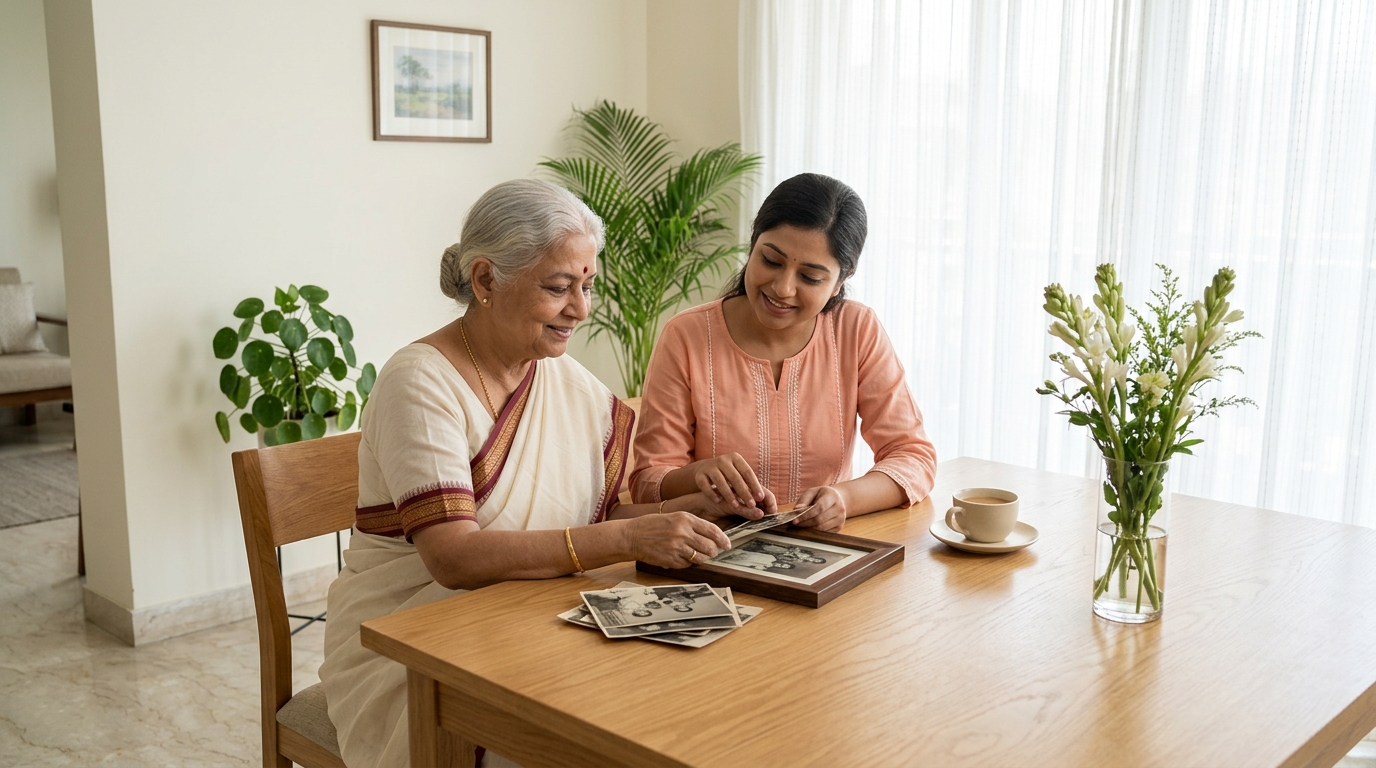
Dementia isn't a single condition — it is a family of syndromes (Alzheimer's disease is the most common) that gradually affect memory, language, judgement and behaviour. What matters for families is understanding that the person you love is still there. What changes is what they can hold on to.
The goal of good dementia care at home is simple: preserve dignity, reduce distress, keep the home safe, and protect the family caregiver from burnout.
Structuring the day
Predictability is the single most powerful tool in dementia care. When memory fails, routine substitutes. A well-structured day looks like:
- Morning routine — bath, breakfast, medicines at the same time each day
- Mid-morning activity — a short walk, reading aloud, a familiar Bengali song
- Lunch and rest
- Afternoon activity — a visit from a familiar person, gentle physiotherapy or seated exercises, folding laundry (yes — familiar household tasks are grounding)
- Evening calm — reduce visitors and stimulation; "sundowning" (increased confusion in late afternoon) is common
- Dinner, medicines, bed — at the same time each day
Deviations from routine — a trip, a family gathering, a hospital visit — are the most common triggers for confusion and distress. Prepare for them, and give the patient extra grounding time after.
Responding to memory lapses
Two principles help:
- Do not correct sharply. If your father asks where his mother is (she passed away decades ago), gently redirect rather than confront. "She's not here right now. Let's have tea together." Correcting the fact is technically true but emotionally cruel.
- Enter their reality. If she believes she needs to go to office, ask what's on the schedule. Then gently guide the conversation towards the present.
This isn't lying. It is compassion applied to a brain that can no longer bridge past and present.
Home safety
- Lock doors that open to the street; consider a discreet door alarm.
- Remove sharp objects and dangerous appliances from reach if wandering becomes an issue.
- Label rooms and cupboards with words or pictures.
- Keep a photo ID and address card on the patient at all times.
- Install grab bars in the bathroom.
- Reduce clutter — visual noise increases confusion.
If wandering is a real risk, an attendant present at all times may be necessary. Many families in Kolkata start with 12-hour daytime attendants and add night coverage as the illness progresses.
The caregiver's burden
The most under-discussed reality of dementia care is what it does to the family caregiver — usually a spouse, daughter, or daughter-in-law. Exhaustion, guilt, resentment, grief for the person still living in front of them — all of it is normal. All of it needs to be spoken about.
Bringing in a trained attendant even for a few hours a day isn't giving up. It is what makes long-term care sustainable. A good agency will match a caregiver with dementia-care experience, brief her on your loved one's specific behaviours, and give you the space to rest.
When medical care overlaps
Dementia rarely comes alone. Diabetes, hypertension, cardiac disease and mobility issues often coexist. A nurse visit weekly or fortnightly to check vitals, review medications, and coordinate with the treating neurologist is part of a complete care plan.
What Suraksha Care offers
Our attendants trained in dementia care understand these principles instinctively. Nurse visits are scheduled in coordination with your treating doctor. Care Coordinators are reachable 24×7 for the moments when the family simply needs to talk through what's happening.
Medical disclaimer: This is general guidance. Dementia progresses differently for each patient — please work closely with your treating neurologist or physician.
Frequently asked questions
How do I know if my parent needs an attendant?
Are your attendants trained specifically for dementia?
What if my parent refuses to accept the caregiver?
Need professional home healthcare?
Get the right caregiver for your family — in under 15 minutes.
Our Care Coordinators are available 24×7 across Kolkata. No obligation, no waiting.