Stroke Recovery at Home: The First 90 Days
The first three months after a stroke determine long-term recovery. Here's what a well-structured home care plan looks like.
Need professional post-surgical care?
Why the first 90 days matter
Neurological recovery after a stroke follows a well-documented pattern. The brain's ability to rewire itself — neuroplasticity — is at its highest in the first three months and remains meaningful for about a year. Consistent, structured rehabilitation during this window is what determines whether a patient regains speech, mobility and independence, or plateaus early.
The good news: much of this rehabilitation can happen at home, safely and effectively.
The care team
A well-structured post-stroke home care plan typically involves:
- **Home nurse** — for medication management, vitals monitoring, catheter/tube care if needed, and coordination with the treating neurologist.
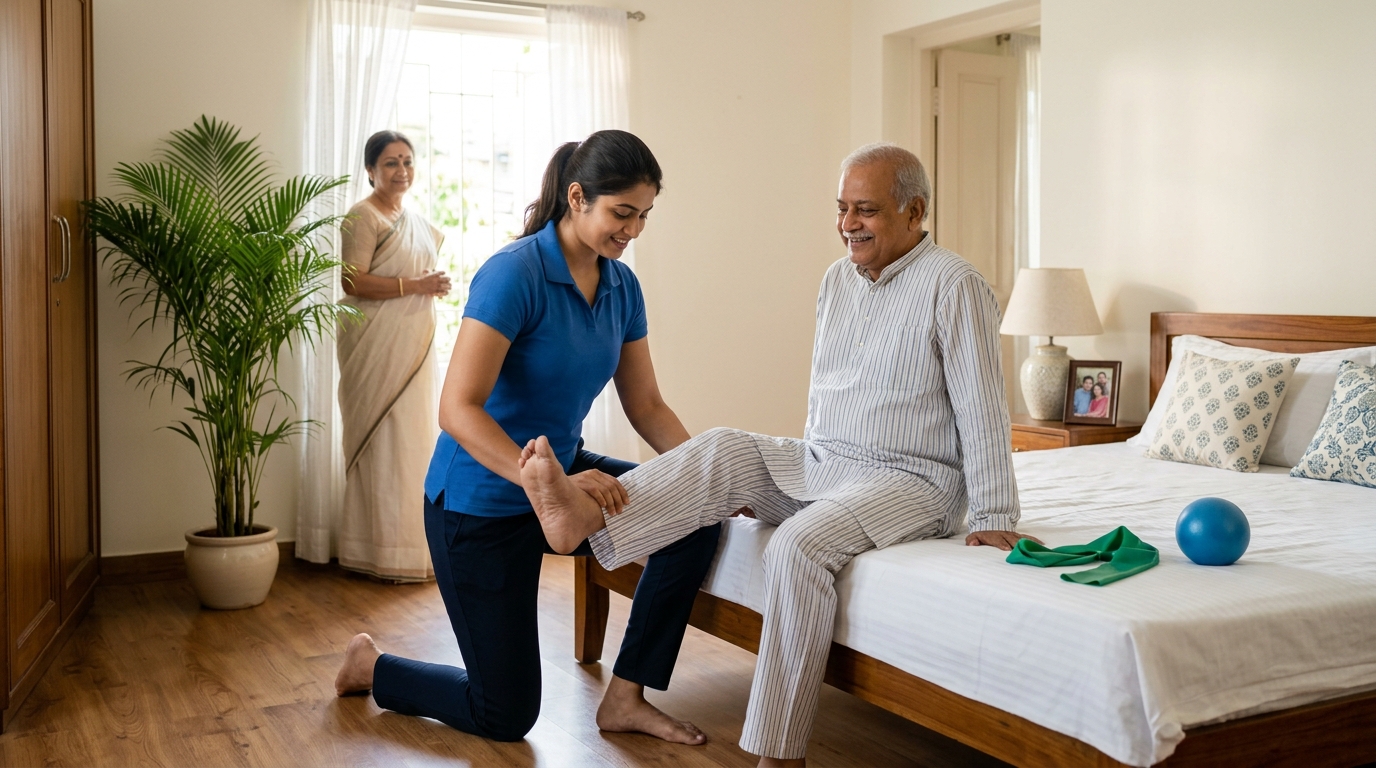
- **Home physiotherapist** — for structured mobility exercises 5–6 times a week.
- **Attendant** — for daily living support (bathing, feeding, safe transfers).
- **Speech therapist** (if aphasia is present) — usually 2–3 sessions a week.
- **Family** — as active participants in exercises, communication, and emotional support.
The daily rhythm
- **Morning** — vitals check, medications, hygiene, breakfast, first physiotherapy session.
- **Mid-day** — rest, gentle range-of-motion exercises, speech practice.
- **Afternoon** — social interaction, second short exercise session, family time.
- **Evening** — quiet routine, medications, sleep.
Consistency matters more than intensity. Fifteen minutes of exercise done every day beats an hour done twice a week.
Preventing another stroke
Recurrence risk is highest in the first year. Non-negotiable priorities:
- **Medication compliance** — blood thinners, blood pressure medication, statins. Every dose matters.
- **Blood pressure and blood sugar** — monitored daily in the first few weeks, then weekly.
- **Diet** — low sodium, controlled fat, adequate protein for muscle recovery.
- **Avoiding falls** — a fall in a stroke patient with reduced balance can be devastating.
- **Follow-up scans and consults** — do not skip them.
Home safety
- Grab bars in the bathroom
- Anti-slip mats
- A hospital bed if the patient is largely bed-bound
- Clear pathways for wheelchair or walker
- Adequate lighting, especially at night
Suraksha Care can arrange same-day delivery of hospital beds, wheelchairs, walkers and other equipment across Kolkata.
The emotional side
Depression is extraordinarily common after a stroke — up to 40% of patients. Signs to watch for: withdrawal from favourite activities, sleep disturbance, refusing food, refusing physiotherapy. If any of these persist for more than a week, mention it to the treating neurologist. Antidepressants and short-term counselling can help significantly.
What Suraksha Care offers
Coordinated home care for post-stroke patients — nurse visits, physiotherapy, attendants, equipment, and continuous coordination with your treating doctor. Please call to discuss what your family's specific setup should look like.
Medical disclaimer: Stroke recovery varies significantly. This article is general guidance — always follow the treating neurologist's specific plan.
Need professional home healthcare?
Get the right caregiver for your family — in under 15 minutes.
Our Care Coordinators are available 24×7 across Kolkata. No obligation, no waiting.