Caring for a Stroke Patient at Home: The First Six Months
A structured guide to home-based stroke recovery — daily routines, physiotherapy, safety, medication compliance and family well-being.
Need professional post-surgical care?
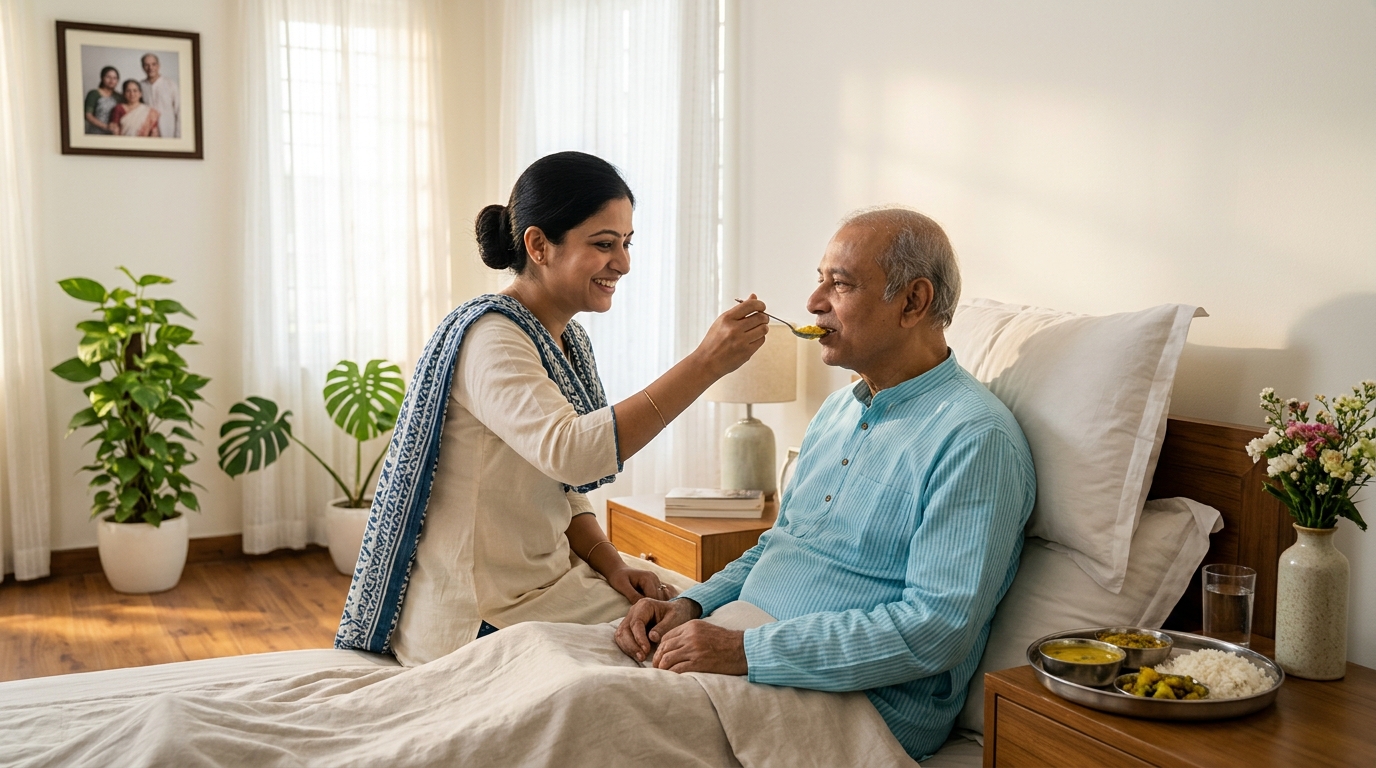
The moment life changes
A stroke rarely gives warning. One evening a father is laughing at dinner. The next morning he can't lift his right arm. The family is in the ER before they can process what has happened. Days of scans and injections and worried consultations follow. Then, quietly, discharge is planned — and suddenly the family finds themselves back home, alone with a patient whose life has changed and who now needs a level of care no one is trained for.
This article is meant to help you find your footing in those first six months.
Understand the arc of recovery
Neurological recovery after a stroke follows a well-documented pattern:
- **The first two weeks** — the brain is stabilising. Priorities are medication compliance (blood thinners, blood pressure), basic mobility to prevent complications, and monitoring for a second stroke.
- **Weeks 2–8** — the fastest recovery window. Consistent physiotherapy and speech therapy make the biggest difference here. The brain's neuroplasticity is at its peak.
- **Months 3–6** — recovery continues but at a slower rate. Focus shifts to independence in daily activities.
- **Beyond 6 months** — improvement is possible but slower. The goal shifts from recovery to maintenance and life adaptation.
Understanding this arc helps set realistic expectations. Rapid improvement in the first eight weeks does not mean full recovery in three months. Slow improvement after six months does not mean improvement has stopped.
The daily routine
Consistency is everything. A well-structured day looks like:
Morning (7:00–10:00)
- Vitals check (BP, pulse, oxygen if prescribed)
- Medications on schedule, especially blood thinners
- Hygiene routine — bath, oral care, dressing
- Breakfast, hydration
- First physiotherapy session (30–45 minutes)
Mid-morning (10:00–12:00)
- Speech therapy or cognitive activity (reading aloud, simple word games)
- Range-of-motion exercises for affected limbs
- Short walk with support, if mobility permits
Afternoon (12:00–16:00)
- Lunch, medications
- Rest — a real nap, not just quiet time
- Passive exercises during rest
Evening (16:00–19:00)
- Second physiotherapy session (lighter)
- Family time — conversation, familiar Bengali serials, prayer
- Light snack, evening medications
Night (19:00–22:00)
- Dinner, night medications
- Gentle warm-water sponge for bed-bound patients
- Positioning for sleep — head elevated, affected side supported
The exact schedule matters less than the fact that it repeats every day. Predictability supports both the patient's recovery and the caregiver's endurance.
Physiotherapy — non-negotiable
Home physiotherapy for stroke recovery is the single most important intervention. In Kolkata, licensed physiotherapists visit for 45–60 minute sessions, typically 5–6 times a week for the first 8 weeks, then 3–4 times a week thereafter.
What good physio looks like:
- **Passive range-of-motion** exercises for paralysed limbs (day 1 onward)
- **Active-assisted exercises** as movement returns
- **Balance training** with support, progressing to independent standing
- **Gait training** with walker → cane → free walking
- **Fine motor exercises** — buttons, pen grip, cutlery handling
- **Progress documentation** every two weeks — measurable improvements in muscle strength, joint range, functional tasks
Skipping the first two weeks of physio is the single biggest predictor of a slower long-term recovery. If your loved one is too tired for a full session, do half. Consistency beats intensity.
Speech and swallowing
If the stroke affected speech (aphasia) or swallowing (dysphagia):
- **Speech therapist** — visits 2–3 times a week for aphasia, more frequently in the first month.
- **Swallowing assessment** before oral feeding restarts. If the patient aspirates (food goes into airway), feeding may need to happen via a Ryles tube initially.
- **Simple daily practices** at home — naming familiar objects, reading short sentences aloud, singing familiar Bengali songs (music activates different neural pathways than speech).
Patience matters. Progress is measured in weeks, not days.
Preventing a second stroke
The risk of a second stroke is highest in the first year — and doubly high in the first three months. Non-negotiables:
- **Medication compliance** — blood thinners (aspirin, clopidogrel, or newer agents), statins, blood pressure medications. Every single dose matters. A missed blood thinner can be fatal.
- **Blood pressure control** — target below 130/80 for most stroke survivors. Home BP monitoring twice daily in the first month, then weekly.
- **Blood sugar control** — HbA1c target below 7% for diabetics.
- **Anti-clot regimen** — often continued for life; do not stop even if the patient "feels fine".
- **Diet** — low sodium, controlled fat, adequate protein for muscle recovery. Cut back on pickles, papads, packaged snacks.
- **No smoking or alcohol**.
- **Weight management** — obesity worsens stroke outcomes.
Set up a simple daily medication chart. A weekly pill organiser is essential. Any confusion about which medication is which becomes dangerous fast.
Home safety
Falls in stroke patients are especially dangerous because of reduced balance and possible blood-thinner use. Priorities:
- **Grab bars** in bathroom and beside the bed
- **Anti-slip mats** everywhere the patient walks
- **Adequate lighting**, especially at night
- **Wheelchair or walker** appropriate to their mobility stage
- **Firm bed** with adjustable head elevation (hospital bed if bed-bound)
- **Remove trip hazards** — loose rugs, cables, low furniture in walking paths
Suraksha Care can arrange same-day delivery of walkers, wheelchairs, hospital beds and commode chairs across Kolkata.
The emotional side
Depression is extraordinarily common after a stroke — affecting up to 40% of patients. Signs to watch for:
- Withdrawal from favourite activities
- Refusing physiotherapy
- Sleep disturbance
- Loss of appetite
- Expressions of hopelessness
If any of these persist for more than a week, mention it to the treating neurologist. Antidepressants (SSRIs typically) can make a significant difference — and post-stroke depression is very responsive to treatment.
For the family caregiver, watch for burnout in yourself. Guilt is common ("I'm not doing enough"), so is resentment ("my life has stopped"). Both are normal. Bringing in professional home care — even just 12 hours a day — is not giving up. It is what makes long-term care sustainable.
When to escalate
Any of the following warrants immediate medical attention:
- Sudden weakness or numbness, especially one-sided (possible second stroke)
- Slurring of speech that was previously improving
- Sudden severe headache
- Difficulty breathing
- Fall — even if the patient feels fine (silent brain bleeds are real)
- Fever above 38°C
- Refusing food and water for more than 24 hours
- Sudden confusion
Save the treating neurologist's number, the nearest ER's number, and the Suraksha Care Coordinator's number as favourites on every family phone.
What Suraksha Care offers
Coordinated home care for post-stroke patients — ICU-trained nurses if needed, home physiotherapy, speech therapy referrals, medication management, equipment, and continuous coordination with your treating neurologist across all major Kolkata hospitals. Please call to discuss what your family's specific setup should look like.
Medical disclaimer: Stroke recovery varies significantly by patient. This article is general guidance — always follow the treating neurologist's specific plan.
Need professional home healthcare?
Get the right caregiver for your family — in under 15 minutes.
Our Care Coordinators are available 24×7 across Kolkata. No obligation, no waiting.